






Support for Students Who Decide to Continue a Pregnancy

Summarise the article with AI:

Sexual Health >> Support for Students Who Decide to Continue a Pregnancy

Support for Students Who Decide to Continue a Pregnancy
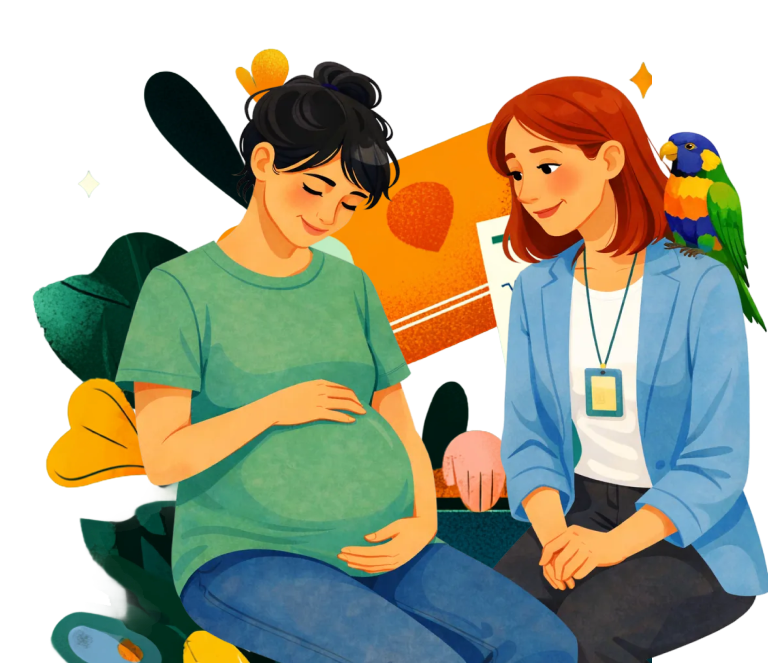
ft. Sally & Amina

Sally

Amina

Financial support for check-ups and birth

When Sally found out she was pregnant while studying in Victoria, her first thought was: “Can I even afford this?” Between OSHC, rent, and tuition, she wasn't sure what kind of support was out there.

OSHC

Most OSHC policies do cover pregnancy—but only after a 12-month waiting period. That means if you get pregnant before the 12 months are up, costs like check-ups, ultrasounds, and birth will be out-of-pocket (and they can be expensive).
Tip: Some providers (like Allianz “Essentials”) don't have a waiting period, so always check your policy.
If you're planning ahead, upgrade your policy early (single → dual or family) so the baby is covered too.

University hardship & emergency grants

Many unis in Victoria—like VU, Monash, Deakin, RMIT, UniMelb, and La Trobe—offer one-off hardship grants to cover unexpected costs (housing, food, medical bills, tech).
Example: Victoria University's support includes up to A$1000 for crisis grants or rental aid.

Community & state‑based relief in Victoria

Red Cross Extreme Hardship Program → helps temporary visa holders with rent, food, or medicine (apply every 2 months).
Study Melbourne Student Centre → lists food relief and student-friendly community services.
Services Australia → while Centrelink is usually off-limits for students on temporary visas, some one-off crisis payments may be available in severe situations.

Flexible study options and leave

Sally worried:

“If I take time off, will I lose my visa?”

Luckily, there are options:

1

Option 1: Take a Leave of Absence (Intermission / Suspension): Up to 12 months leave for pregnancy or health reasons. You don't pay tuition during this time, but you must tell both your uni & Home Affairs so your visa remains valid.

2

Option 2: Defer Your Course (Postpone enrolment to a later intake): Postpone your studies for a later semester—useful if you're in your first term. Needs medical/compassionate evidence before census date.

3

Option 3: Combine These with Flexible Study: Many unis allow part-time study, online classes, or special consideration requests. You can also register with Inclusion/Disability Services to set up an academic plan (so you don't need to re-apply for extensions each time).

Sally's plan/next steps:

Step 1: Contact international student support (or academic advisor)

Clarify policy on leave, deferral, part‑time enrolment
Ask if you can switch your study load or access online options

Step 2: Prepare your application

Complete the leave or deferral form before census date
Attach medical certificate or evidence of pregnancy

Step 3: Inform Home Affairs

University must update your CoE in PRISMS. This keeps your student visa valid during time off

Step 4: Register for inclusion services

If you're studying, set up support (e.g. extra time, flexible deadlines)

Step 5: Review your study plan

Decide if you continue part‑time, go on leave, or defer entirely

Access to childcare, breastfeeding/pumping spaces

Many universities provide:

On-campus childcare centres or referrals
Breastfeeding/pumping spaces (libraries, student hubs)
Student parent or mothers' groups for peer support
Check with your uni's international student support office or health centre.

Guidance on healthcare, visa status for child, and emotional support

Sally asked:

“Will my baby be an Aussie citizen automatically?” Not at birth—citizenship is only automatic if a parent is an Australian citizen or PR. Instead, the baby gets the same visa subclass as you (usually Student 500). You must notify Home Affairs within 28 days using Form 1022 and provide the birth certificate/passport.

Future pathways:

If Sally/her partner gets PR later → baby can get citizenship by descent.
If her child lives in Australia continuously for 10 years, they may become a citizen automatically on their 10th birthday.

Sally's plan/next steps:

Notify Department of Home Affairs within 28 days:

Use Form 1022 to update her and baby's visa situation
Submit baby's birth certificate and passport once available

Ensure the baby is added to her (or partner's) current visa:

Visa subclass will mirror the parent's temporary student visa

Keep a record of living in Australia:

To qualify for citizenship after 10 years if status doesn't change

If Sally obtains PR or citizenship in future:

Apply for the baby's citizenship by descent

Frequently Asked Questions

More Resources / Relevant Articles

Common STIs

Common STIs and Their Symptoms

Getting Tested

STI Testing: What to Expect, Privacy, and Costs