







Coping with Adjustments: Homesickness

Summarise the article with AI:

Mental Health >> Coping with Adjustments: Homesickness

Coping with Adjustments: Homesickness

ft. Kaito

Kaito

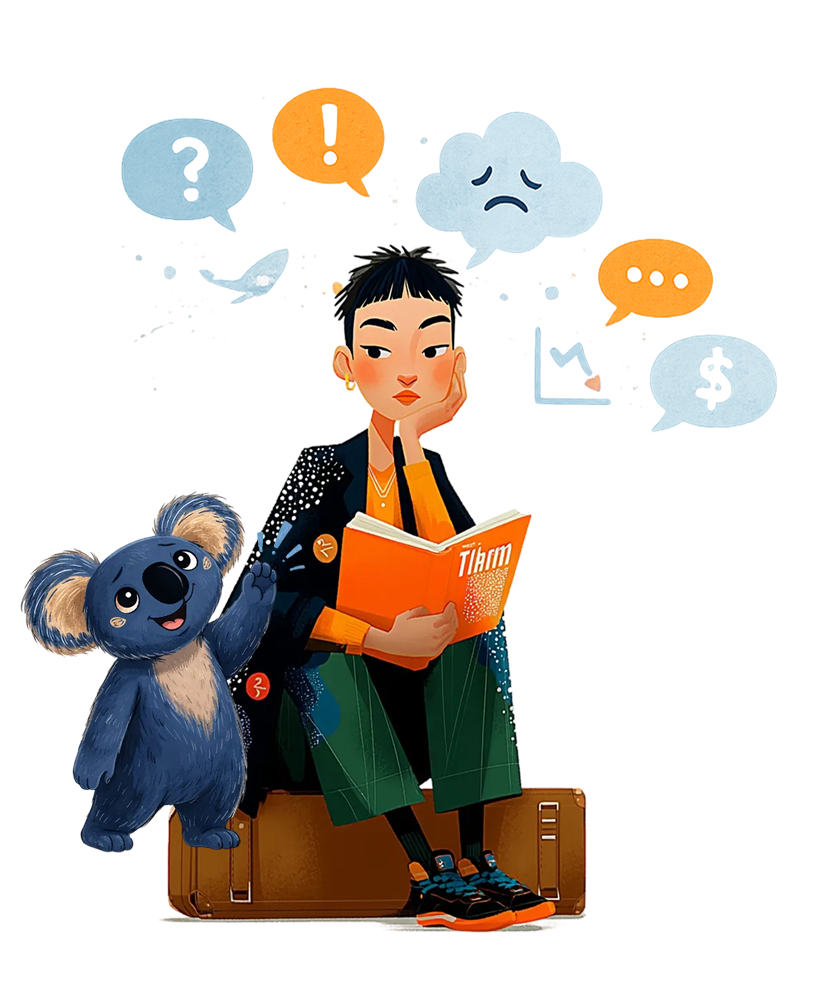
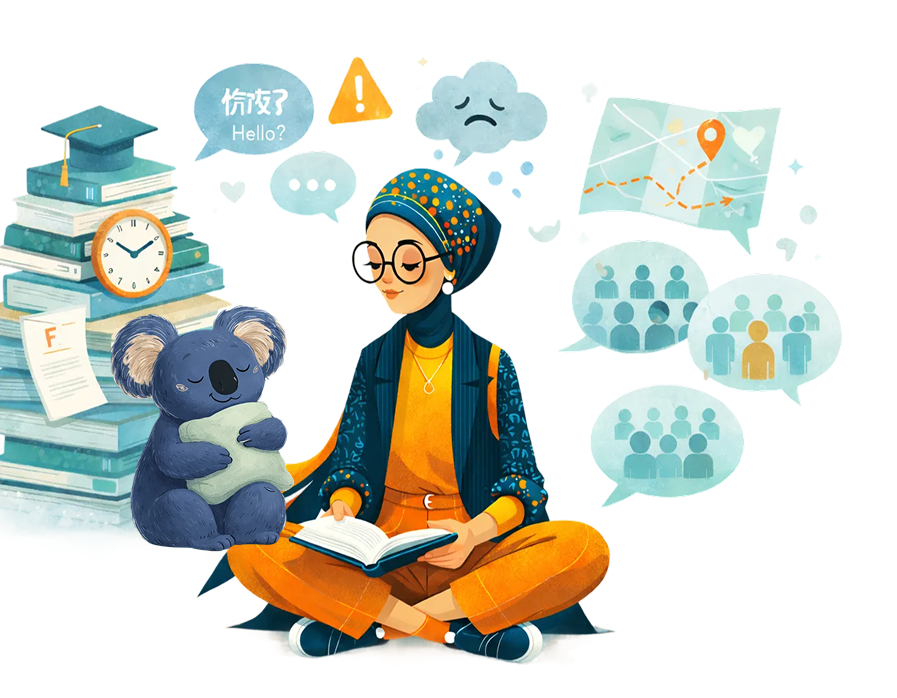
Kaito (he/him) is a Japanese international student who arrived in Melbourne two months ago. While everything felt exciting at first, the distance from home has started to feel heavy. He misses his closest friend in Japan — the only person who knows about his sexuality — and often feels lonely and disconnected. Struggling to make new friends, keep up in class, and express himself confidently in English, Kaito finds homesickness slowly turning into stress, exhaustion, and a deep sense of isolation.

Homesickness is normal - about 80% of international students experience it. It can happen anytime, even after you’ve settled in. For many, it fades after a few weeks, but it may return. If it continues, reach out to friends, counsellors, or support services.

Ways to cope

Celebrate your culture: Mark your home festivals and share them with new friends. Cook your favourite food or plan a small gathering.
Stay connected wisely: Video call your family and friends on a schedule. But if too much contact makes you sadder, it’s okay to take a little break.
Build a daily routine: Eat healthy, exercise, and sleep enough. Routine gives you balance and energy.
Have a good cry: It’s okay to feel emotional. Crying can help you move forward.
Explore your new environment: Visit markets, galleries, or local events. Join clubs or sports teams at uni to meet people.
Choose your accommodation well: If possible, student housing is a great way to meet other students quickly.
Join clubs or volunteer: Student clubs, unions, and volunteering open doors to new communities and friends.
Reach out for support: Use your uni support services, counsellors, or student centres. They can connect you to help and other students who feel the same.

How to Make Friends

Utilise all uni resources! Join clubs and societies to make friends, and attend campus events such as orientation.
Try volunteering: Volunteering lets you meet people, improve your English, and gain work experiences. It’s also rewarding and helps you feel part of the community
Everyday places: Friends are not only at uni - you can meet people at your workplace, gym, sports teams, or event apps.

Tips:

Say yes to new opportunities and don’t stay in your room all the time!For example, some students first join their own cultural community and then friends naturally grow like a chain reaction!

Academic & Language Pressure

Use university’s resources (academic and language support)

Tips:

Balance study and rest. Your physical and mental health is the most important. Don’t overwork yourself!

Sexual Health

Learn more about Sexual Health at here

Counselling & Mental Health

Use university’s resources (academic and language support)

List of Mental health supports in Melbourne: Victorian Mental Health Services

It’s normal if one counsellor doesn’t fit. Ask your counsellor about the next step first. You might not be connecting to your counsellor yet, or the therapeutic approach might not be effective at this time. It’s important to talk to your counselor about how you feel about it. Of course, you can try another.

Sexuality & Cultural Stigma

Australia is an inclusive and diverse country. Finding safe people and safe spaces can make you feel stronger.

Melbourne has many LBGTQ+ community centres and safe spaces for LGBTQ+ students

Frequently Asked Questions

More Resources / Relevant Articles

Common Mental Health Challenges for International Students

Mental health challenges and support

Academic Pressure, Language & Belonging

Academic pressure and belonging